
Reflections About the Black Letter

I hate widowhood! Since my wife died on Christmas morning of 2013, I have been forced to deal with life after spousal loss—every day, every night. Meeting her as a teenager, choosing to marry when we were both 19 years old, being married for 41 years, then losing her has forced me to deal with thoughts and feelings that can make a person question their sanity. I chose to be married. I did not choose loss, nor the marital status that comes with it. It’s been a dozen years since Ruth Ann died. I’m still standing. I’m a with survivor, but that doesn’t change the fact that I hate widowhood!

“Together” died when she died. No more presence. Deafening silence. No more touch. No more holding hands as we walk or when we sit together at church. No more dates. No more hugs. No kisses. No more talks. My “sounding board” is gone. No more ministry together. I hate widowhood!

However, I can also say, I’m proud to be a widower! How could it be that someone both hates something, yet is proud of it? Being a widower suggests I was blessed by God to be married. The only way a person can become widowed is they have to have said, “I do.” Not everyone born into this world is privileged to experience life together in a marriage relationship. Thousands upon thousands of adults in our country are “never marrieds.” They have never experienced this unparalleled blessing. I got to enjoy that blessing—for over four decades! I’m deeply grateful for that blessing.

I’m also proud to be a widower because it proves I did what I promised I would do: “…in sickness and in health…’til death do us part.” Divorce is too common in our world. Marriage can be a challenging life experience. Phases of hardship are inevitable. Bad marriages end in a variety of ugly ways. Good marriages end in only one way: death. That means someone is left behind. A marriage can end in a sudden tragic experience or due to a long-term health struggle. Parkinson’s Disease gifted me with the honor of caring for my wife for over eight years in her decline. Caregiving is challenging, even when you love that person dearly. However, it is also a compassionate ministry in which we are helping that other person with their one-time transition from this life into eternity. What a gift to give your spouse! 

I hate widowhood, yet I’m proud to be a widower. Sounds weird, doesn’t it?  Who wouldn’t prefer to be married? Most adults marry, for good reasons. The value of blessings increases because you have someone to enjoy them with. The weight of burdens is lightened because they are shared with your life partner.  It’s an appealing way to live—together (with someone you love and someone that loves you). 

If you are married, treasure that blessing. Make it as magnificent as the two of you can with the help of the Lord. Don’t dwell on it, but don’t forget it: Your marriage has an end, just like it had a beginning, and you don’t know when the end is. So, celebrate the landmarks, but cherish every single day.

If you are widowed, remember how blessed you were (and still are!) because of your marriage. We can be thankful for what we had, but no longer have, when we realize we are still enjoying blessings because of that marriage. Be proud of the fact your story includes this epithet: Promise made. Promise kept.

~Dean Miller
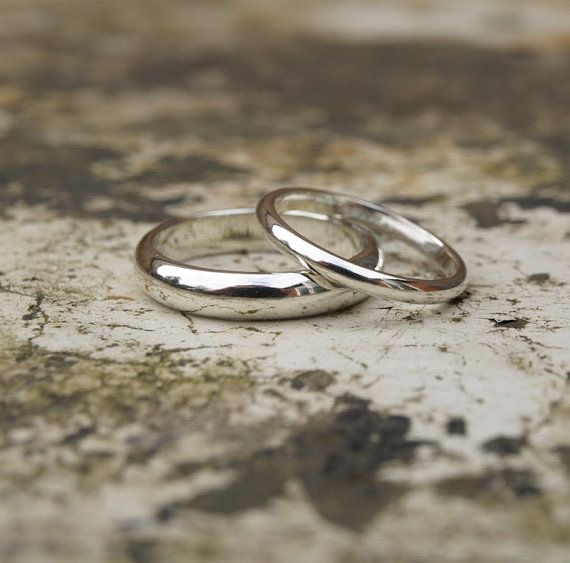
I THINK A LOT ABOUT MARRIAGE NOW

(Reflections of a seasoned widower)

I was nineteen years old when I said, “I do.” She was, too. What were we thinking? What did we know? Not much, but we knew, for sure, we wanted to be together.

It worked, until it didn’t. Forty-one years later, after eight-plus years of decline due to Parkinson’s Disease, she died at the age of 61. The together-journey ended.

I’m good at living in the moment, not so good at reflecting on the big picture and looking down the road. While married, every day seemed full—because it was full. I loved being married! Looking back now, it was like I was living in this idyllic bubble. Wife. Daughters. Church family. Prosperity. Oh, there were stressors. However, the blessings always outweighed the burdens, and every storm eventually ended. It was a wonderful life!

My bubble busted! My wife died December 25, 2013. My marriage was taken from me. Death stole my marriage. I was a-l-o-n-e! I chose to be married. I did not choose to be widowed. If you haven’t heard, life after the loss of a beloved spouse is a brutal adjustment (even if you saw it coming in long-term caregiving). It’s possible to be resilient, to rehab, to restructure your life—but it takes a lot of effort over an extended period of time. It can be a grueling grind. There’s no better help in that process than the Lord. “I will lift up my eyes to the hills—from where does my help come? My help comes from the Lord, who made heaven and earth” (Psalm 121:1-2; ESV). Widowhood is not the end of the world, but it may feel like it initially. There is life after loss, if it’s what we choose.

Over the last 11 years, I have had a lot of time to reflect on what I had and what I lost. Now I see the big picture, more clearly than before. What did I have? What did I lose? A person. A relationship. Marriage!

Marriage is an unparalleled blessing. When we’re married, we have:
Companionship. Someone we love. Someone that loves us. A teammate. A counselor. Someone to talk to. Someone to listen to. Someone to do things with. Someone to do nothing with. Someone to share blessings with. Someone to help you carry burdens. Someone to spiritually exercise with (read, study, and discuss the Bible, pray, worship, serve). Someone to touch. Hold hands with, hug, and kiss. Someone to go to bed with. Someone to get up with…every day…until there are no more days.

Why did I write this blog? (1) I wrote this for the praise of God’s glory (Ephesians 1:6, 12, 14). He certainly displayed His unsearchable wisdom and genuine love for humanity when He saw something “not good” and did something about it (Genesis 2:18-25). Our Father provided an opportunity to experience life married. There’s no blessing like marriage—none! It’s a blessing chock-full of a multitude of priceless blessings. (2) I wrote this for the benefit of those who are married. If you are married, don’t just appreciate your marriage, cherish it! Don’t just live in the moment, reflect on the big picture. Think about what you are experiencing in this season of your life. Don’t take it for granted. Make sure your spouse knows every day how much you appreciate your “together” with them. Talk frequently about what you like about being married to your mate.

Life is about people, relationships, and experiences. Of all the people in our lives, our marital mate is our #1 human priority. That relationship is the only one in the Bible described with the unique phrase “one flesh” (Matthew 19:6). The experiences we have with that mate are our most precious memories.

Marriage is holy matrimony because of its Source and Witness (Genesis 2; Malachi 2:14). It deserves to be honored among all (Hebrews 13:4) and treasured by those who are enjoying it.

~Dean Miller

deanmiller@widowhoodworkshop.com

Widowhood Workshop Ministry (Public FB Page)

I am NOT Single

I arrived for my vision care appointment. I am not a fan of digital check-in, but I did it anyway. When the screen appeared requesting my marital status, I mentally responded, “Are there actually that many options?” Of course, among the options were “Single,” “Married,” and “Widowed.”

When I was 19 years old, one Wednesday night at the local park I proposed to my girlfriend. She said, “Yes!” Less than five months later we said, “I do.” On that Saturday afternoon we changed our marital status from “Single” to “Married.” We were both so excited! It was a youthful dream come true for both of us. A couple hours later, we launched our journey to relocate over 600 miles away from our parents.

​Being married to Ruth Ann was a joy. We meshed well together. It was a relatively smooth transition from “Single” to “Married.” The Lord blessed us richly. Three daughters later, we felt even more married—we were a family. There were stressors, but the blessings far outweighed the challenges.

​In her early 50’s, my wife was diagnosed with Parkinson’s Disease. Her decline was swift for a patient with that affliction. At age 61, she passed away on Christmas morning. Our marriage ended! Forty-one years together was not long enough, but what could I do about it? I had to accept it. That took time.

​I chose to go from “Single” to “Married.” I was forced to go from “Married” to “Widowed.” Happy she was “with the Lord” (2 Corinthians 5:6-8), but I was a mess that she was gone. How do you go on living when the one you love mostdies? Over time and with much struggle, I learned the answer: walk by faith, not sight, nor feelings. Embracing God’s grace became sufficient in my weakness (2 Corinthians 12:9).

Identifying myself as “Widowed” distinguishes me from those who are “Single.” I am a widower. That reveals two things about me: (1) God blessed me to experience life married. Oh, what a blessing that is! It’s an unparalleled blessing that is chock-full of priceless blessings. God was so good to me that I enjoyed that unique “one flesh” relationship for over four decades. God is good! (2) I hoed my row all the way to the end. Not everyone who marries hoes their row all the way to the end. I did. I said, “…until death do us part,” and I meant it. I lived it.I am proud of the fact that by the grace of God, I was able to care for my wife with a physical affliction for over eight years.

No, I’m not “Single.” I’m “Widowed.” There’s a difference.  Perspective matters.

~Dean Miller

deanmiller@widowhoodworkshop.com

Widowhood Workshop Ministry (Public FB Page)

ATTITUDES VS FACTS

Facts can be brutal. Life can bite. It can feel like life sometimes rips a part of your heart out. It is sad to see folks experiencing such harsh circumstances. Disease. Abandonment. Unemployment. Betrayal. Abuse. Neglect. Divorce. Bankruptcy. Injury. Loss. There are so many things that can go so terribly wrong in life. To some degree, we are all at the mercy of life’s negatives. One thing’s for sure—things are going to go wrong in our life. It’s inevitable.

However, life’s challenging circumstances can be trumped. Dr. Karl Menninger was right when he said, “Attitudes are more important than facts.” We don’t always get to choose our circumstances (facts), but we can always pick our perspectives (attitudes). Attitudes trump facts. Looking on the bright side, i.e., choosing a positive disposition can be difficult. It may seem, on occasion, impossible. Difficult is not impossible, it’s just difficult. At the very least, we can always reflect on this question (which always has an answer): “What can I learn from this?” There are always things we can learn from the trials we face.

Attitude matters. Negativity breeds defeat. It is hard to overcome anything when we’ve chosen hopelessness. Life change for the better begins when we decide to act better than we feel and take charge of the direction of our life. Dr. Paul Faulkner put it this way: “Grab your ‘wanter’ by your ‘willer’ and make yourself do what you know you ought to do, and God will help you do it” (Making Things Right When Things Go Wrong, p. 22). That’s good advice for daily living!

~Dean Miller

deanmiller@widowhoodworkshop.com

Widowhood Workshop Ministry (Public FB Page)

DETERMINATION IS (ESPECIALLY) CRITICAL IN LIFE AFTER LOSS

Joy Johnson completed her 25th run in the New York City Marathon. In recent years she has annually been the oldest woman to participate in this event. She stumbled and hit her head near the 20-mile mark of the 26.2-mile race but, still, arrived at the finish line with a time of seven hours, 57 minutes, 41 seconds. Now that’s determination! She died in her sleep the next day at the age of 86. 

    Determination is always critical to achievement or success. Without it we are easily distracted and tempted to quit. Determination comes from deep within us when we are “bound and determined” to see something through to the end no matter what. When we experience negative circumstances (and the negative thoughts and feelings they ignite) our determination can dwindle, even die.

    Imagine losing a loved one. For some of us, we don’t have to imagine. It’s our reality. We are actually living life after loss. Imagine losing a beloved spouse, our dearest person on earth. Life after loss requires a lot of determination. It’s tempting to die when our loved ones die, especially a marital mate. Life may not seem worth living anymore. We may not want to live anymore. We may wonder who we are since we are no longer someone’s wife or husband. We may end up drifting into a mere state of existence.

    When we experience loss, we have a right to grieve. We need to grieve. We need to grieve in ways that are effective for us individually. We need to grieve deeply as long as necessary for us. For a while, it may take a lot of determination just to get up out of bed or engage in our daily routines. It will definitely take a lot of determination to learn to cope day in and day out with the reality of loss and how it has impacted our life. Building a new life after loss requires hard work for a long time.

    Christians suffer loss like everyone else. However, God’s word helps us understand that living a Christian life is the ultimate marathon (1 Corinthians 9:24-27). It is a race that requires endurance (Hebrews 12:1). A focused determined effort is critical to ending with an “imperishable crown” (1 Corinthians 9:26-27). This personal discipline involves both self-control and self-motivation. We are going to experience hard times, possibly even horrific loss because of the fallen world in which we live. Christians are not exempt from trials (James 1:3-5; 1 Peter 2:19-20; John 16:33). We must keep reminding ourselves not to give up, not to quit. We must be determined to finish our race, even if someone we love has finished theirs long before us. Determination is critical to meaningful life after loss. One of the mottos of the Widowhood Workshop ministry is: “Don’t Die Until You’re Dead!” Be determined to keep living, no matter what!

~Dean Miller

deanmiller@widowhoodworkshop.com

Widowhood Workshop Ministry (Public FB Page)

GROW: GOAL #3

(This is the third in a series of three blogs about the widowhood journey.)

Here is a plan for life after loss of a spouse: Goal #1: Survive. Goal #2: Cope (see
previous blogs). Goal #3: Grow. It is not the mere passing of time but what we do
with our time that determines whether or not we achieve our life goals.

No human being goes through a crisis without being changed. Extreme
stressful experiences have an impact. They can cause us to become negative
people. Bitter. Resentful. Critical. Apathetic. Crises, though, can also stimulate
growth. We do not choose our crises, but we do choose our reactions to them.
We can choose to grow after loss.

Spousal loss is an unparalleled painful experience. The loss is one thing, living
with it (every single day, every single night) is another. Both are crises. They
challenge those of us left behind. We have to decide how we are going to react.
Choosing to grow, i.e., changing for the better, is a wise decision. It is actually
taking the burden and using it to make a blessing.

  1. We can grow faith. An unchallenged faith can become weak, not unlike unchallenged muscles which lead to weakness of the body. Loss can motivate us to seek a closer walk with the Lord, the rely more on His direction.
  2. We can grow insight. One of the ways wisdom is gained is by experiencing hardships. A lot can be learned about life, ourselves, people, human nature, relationships, etc. while dealing with difficulties. The loss of a spouse can bring clarity to our view of earthly life.
  3. We can grow empathy. Loss can soften us up, cause us to not just have more compassion or sympathy for others but even empathy. It can prompt us to be more naturally vulnerable to the feelings or experiences of others. Empathy can become a motivator to minister to hurting people.
  4. We can grow ministry effectiveness. When we know little to nothing about what others are going through, it is hard to know what to do to help them. The experience of loss teaches us more effective ways of serving hurting people.
  5. We can grow gratitude. Life is a gift we should never take for granted. Yet, we do. When do we appreciate our health? Often, not until we lose it. I thought I appreciated my wife. After her passing, I found out…not nearly enough. I look back now with less grief and a whole lot more gratitude.
  6. We can grow endurance. If we survive…if we learn to cope…we are raising our endurance level. Runners build stamina by experience. Long distance runners challenge themselves with plans that can include pain. Increasing our ability to endure life’s challenges often comes from experiencing them.

Loss and all that goes with it can ruin us. Grief can become our taskmaster. We
can degenerate into a shell of the person we once were. That, though, does not
have to happen! We can choose a different reaction, a different result. It is
summarized by a book title: Growing Through Grief.

~Dean Miller

deanmiller@widowhoodworkshop.com

Widowhood Workshop Ministry (Public FB Page)

Work Cited:
Flatt, Bill. Growing Through Grief. Nashville: Gospel Advocate Co., 1987.

COPE: GOAL #2

(This is the second in a series of three blogs about the widowhood journey.)

The first realistic goal for a recently widowed person is survival (see previous blog). There is no need to think of coping if we do not choose to survive the loss of our spouse. Make no mistake, it is a choice. A friend’s Facebook post recently observed: “I had rather die while I am living than live while I’m dead.” Not everyone feels that way. Some choose the latter philosophy. They die before they are dead. They die when their mate dies. Life no longer seems worth living. Consequently, they bury the living with the dead. They choose to merely exist.

    If we string together several days or weeks of surviving, we build self- confidence. We begin thinking we might be able to try to do more than just breathe. Maybe we can do more than baby steps in our grief journey.

    Visiting at a hospital one day, I remember seeing a flyer taped to a wall in the elevator. It had three words on it that caught my attention: “I Can Cope.” It was a flyer promoting a cancer patient support group ministry at that hospital. Love that affirmation: “I Can Cope.” Yes, we can. We are wired to be resilient. And when we add to that natural resilience, reliance upon God(Proverbs 3:5-6; Psalm 25:4-5; Philippians 4:11-13), we can cope with anything.

    What is coping? How is it different than surviving? Survival is just keeping our head above water. We are just doing what we have to do to get through each day. Coping is when we intentionally are changing our thinking and behaviors to successfully manage our circumstances. We have heard about people telling other people to “get a grip!” Well, when we are coping, we are “getting a grip” on things (most of the time). We are changing our minds and actions to meet the challenges we are facing. We are re-establishing a meaningful purpose and direction for our life. 

Think of the difference this way. You are in a small boat in rough waters. All you can do is keep yourself in that boat as it tosses aimlessly in the turbulence. That is survival. Coping is when you discover there actually are oars and an anchor in the boat and you choose to use them. Now you have some control over the boat. You start rowing in an intended direction. When you are exhausted from rowing in your desired direction, you can let down your anchor and rest without becoming dislocated. All along you had oars and an anchor available. Your inability to see them and think straight were due to your high stress level. You have been so consumed with surviving this frightening experience that you did not realize there were oars and an anchor available. Now you are beyond merely surviving. Now you are coping! Now you are making progress.

~Dean Miller

deanmiller@widowhoodworkshop.com

Widowhood Workshop Ministry (Public FB Page)

SURVIVE: GOAL #1

(This is the first in a series of three blogs about the widowhood journey.)

Overwhelmed. It can feel like you are drowning and you don’t have what it takes to keep your head above water. Despair. It can seem like there is no hope. Shock. This is not real. This can’t be happening. Numb. Heartbreak past feeling.

    It is an awful thing to lose your beloved spouse. Sometimes it happens suddenly. For others, it may be something expected for a long time. Either way, you may think things you have never thought and feel things you have never felt. It is not uncommon bearing that heavy burden of grief that you question yourself. “Am I going to make it?” “I don’t think I can handle this.”

    There is good news! George A. Bonanno, a clinical psychologist, has written a book titled: The Other Side of Sadness: What the Science of Bereavement Tells Us About Life after Loss. In it he observes, “Humans are wired to survive…Resilience is the norm” (p. 155). We may not feel that way, though. It may not be what the circumstances would lead us to believe. It is true. Instinctively, we will fight to survive.

    The first realistic goal for a recently widowed person can be summarized in one word: Survive. Surviving is hard. It takes focused determination over a sustained period of time, yet, one day at a time. Jesus advised, “Sufficient for the day is its own trouble” (Mt. 6:34). At times, it may seem so bad it is better to think in terms of one hour at a time. In the movie, Finding Nemo, Dory advised, “Just keep swimming!” My advice to the widowed early on? “Just keep breathing!” Not often is this wise, but it is in dealing with serious loss: expectvery little of yourself. Don’t press. Just keep breathing. Early on, survival is all that is necessary.Look at getting through each day as a victory. Accumulating victories builds confidence.

In the exhaustion, weakness, even desperation that can come with grief our greatest source of strength is the Lord. “Hear my cry, O God; Attend to my prayer. From the end of the earth I will cry to You, when my heart is overwhelmed; Lead me to the rock that is higher than I” (Psalm 61:1-2). His grace not only saves, it sustains. In a painful time in the apostle Paul’s life he was reminded by the Lord, “My grace is sufficient for you, for My strength is made perfect in weakness” (2 Corinthians 12:9). When deeply grieving our loss, there is nothing we need more than greater reliance on the Father of grace whose strength is made perfect in our weakness. #survivedailybygrace

~Dean Miller

deanmiller@widowhoodworkshop.com

Widowhood Workshop Ministry (Public FB Page)

What is the Purpose of Our Annual Retreat

Dr. Ira North, probably best known for his lengthy ministry with the old Madison church in Middle Tennessee, recommended to churches that wanted to grow to go “all out” for young people. I agreed with that when I first read it in his book and still believe he was “spot on.” One of the effective ministries that has been blessing our youth for decades has been youth meetings (of various sorts). They complement the efforts of conscientious parents to train their children in the way they should go (Prov. 22:6). Parents and churches have cooperated to host such events, provide transportation and in some cases even housing.

Why not a Widow/Widower Retreat to build faith and provide encouragement to those who have gone through the excruciating loss of their spouse? Why can’t families and churches work together to provide this kind of experience for those of their number who are trying to do life after loss? A “youth meeting” for the widowed! Those were the kinds of reflections that led the Widowhood Workshop ministry to host its first-ever retreat in August of 2018.

Last year’s retreat brought together over 70 widows and widowers from 14 different counties in Tennessee and eight different states. Attendees ranged in age from their 30’s to 90’s. They represented 2,414 years of marriage and 408 years of widowhood. Our exit surveys indicated it was overwhelmingly successful. Again, the LaVergne (TN) church of Christ (Rutherford County) is graciously permitting the Widowhood Workshop ministry to use their building to host our second retreat August 2-3, 2019.

We have a responsibility to care for those in unusually difficult life circumstances (Ja. 1:27; 2:15; cf., Mt. 25:31-46; 1 Jhn. 3:17-18). What are we doing for the widowed? Can we do more?

For more information on the upcoming retreat click the link below. www.widowhoodworkshop.com/retreat